
blog
Expandable container house: the perfect combination of innovation and practicality
8 月
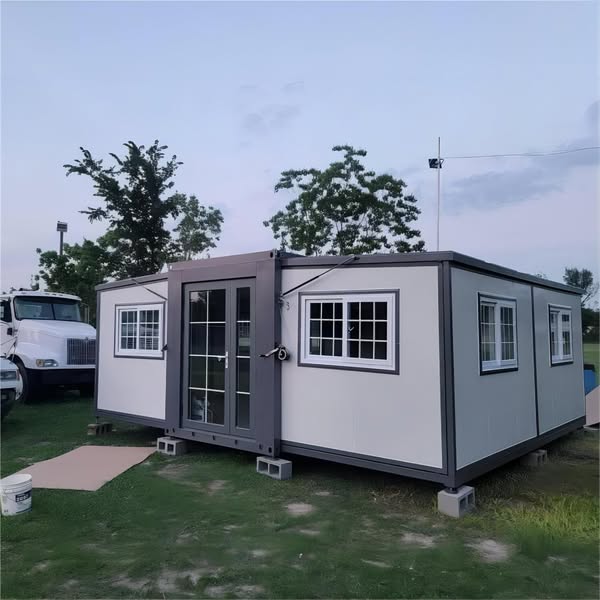
In today’s rapidly developing world, housing needs are increasingly diverse. Expandable container homes, as an innovative architectural form, are gradually gaining popularity, demonstrating their unique appeal and enormous potential.
I. Unique Advantages of Container Homes
Container homes, with their steel frames and sandwich panels as enclosure materials, offer numerous significant advantages. They offer high safety performance and excellent structural stability, capable of withstanding natural disasters and certain external impacts. Their unparalleled flexibility allows them to be moved around freely, allowing for the construction of rooms of varying sizes to meet specific needs. Their rapid assembly makes them widely used in temporary dormitories and offices on construction sites, as well as in cultural tourism, rural reconstruction, and at train stations. Furthermore, container homes offer significant environmental benefits, reducing pollution to the surrounding environment. They are also disassembled and recyclable, aligning with the concept of sustainable development. Furthermore, their relatively low cost, not requiring reinforced concrete structures, offers significant price advantages.
II. Innovative Design Strategies for Expandability
(I) Clever Utilization of Multi-Level Layouts
While ensuring the foundation’s load-bearing capacity, the rational arrangement of the building structure and steel supports allows for a multi-level layout, significantly increasing the usable area. Carefully design the height and area of each floor to ensure safety and comfort, making the most of limited space.
(2) Demonstrating the Charm of Flexible Design
Maximize space utilization by optimizing the floor plan and spatial configuration. Create double or multi-layer structures within the container to increase usable space. Use sliding doors or movable partitions to change the room structure, increasing flexibility and utilization, and meeting the needs of different scenarios.
(3) Emphasize Transparency and Openness
Adopt an open and transparent design concept to reduce partitions and obstructions, making the space appear more spacious. Use transparent or translucent materials as partitions to maintain privacy while increasing the sense of transparency and creating a comfortable living environment.
(4) Rational Utilization of Corner and Wall Space
Install storage cabinets or bookshelves in corners and install hanging racks or hooks on the walls to increase storage space and maximize space utilization. These detailed designs fully demonstrate the practicality and user-friendly design of expandable container homes.
(3) Market Status and Development Prospects
In recent years, the container home market has shown rapid growth worldwide. Their low price, short construction period, and high mobility have made them a new option for solving housing problems and meeting temporary needs. However, the market also faces challenges, such as regulatory and legal restrictions, image and acceptance issues, and limitations on building materials. Nevertheless, with the growing demand for sustainable development and the rising costs of traditional construction, container homes offer significant potential for future development as an economical and environmentally friendly housing solution. The container home market is expected to expand further in the coming years, gradually becoming a key component of housing construction.
IV. Practical Application Case Analysis
(I) Strategies for Expanding Office Container Homes
Open designs enhance spatial transparency, bringing people closer together and improving communication efficiency. Built-in storage saves space, creating a neat and aesthetically pleasing interior environment. Glass partitions divide functional areas, maintaining a sense of transparency while meeting diverse office needs. A rational layout and selection of multifunctional furniture improve space utilization, creating a comfortable and practical office environment.
(II) Implementation of Customized Container Homes
Some customized container homes utilize multi-layered layouts and flexible designs to achieve diverse space utilization. For example, terraces or balconies can be built onto the exterior of the home for leisure or storage. Utilize walls and ceilings to expand space, installing shelves or hooks for increased storage. Also, pay attention to the exterior design of the home, painting it to your personal preferences to create a unique living space.
V. Conclusion
Expandable container homes, with their unique design concepts and innovative design strategies, offer new ideas and solutions for solving housing problems. They are not only economical, environmentally friendly, and flexible, but also offer a variety of ways to expand space and meet diverse needs. With the continuous development of the market and advancement of technology, expandable container homes will undoubtedly play an even more important role in future construction, creating a better living space for people.
In the future, we look forward to seeing more expandable container home projects emerge, bringing more excitement and convenience to urban development and people’s lives. At the same time, the government and all sectors of society should increase their support for container homes, improve relevant regulations and policies, and promote the healthy development of the container home market. Let us all look forward to a bright future for expandable container homes!
I hope this article has been helpful. If you have specific requirements for content or style, please feel free to let me know and I will create a more tailored article.
