
blog
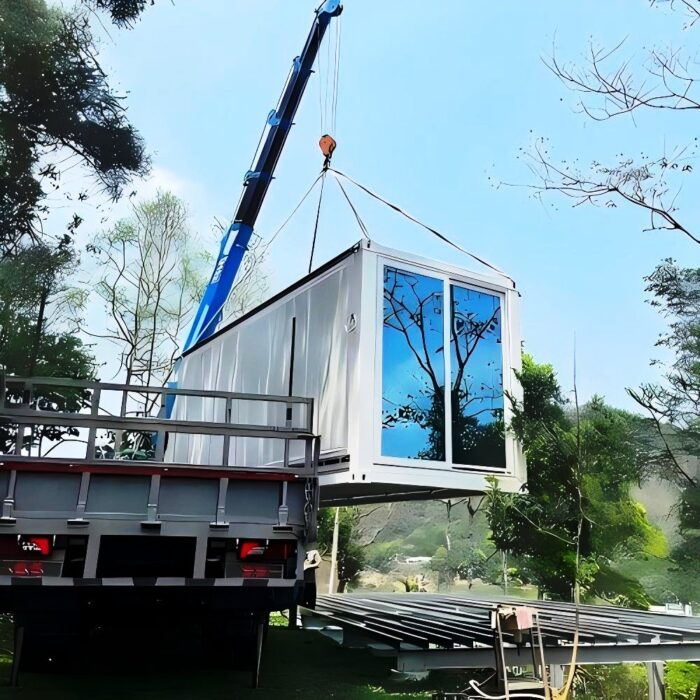
A Comprehensive Analysis of Installation, Transportation and Quality Stability of Container Houses
7 月
Container houses, as a convenient, environmentally friendly and mobile form of construction, are increasingly being widely applied in fields such as temporary buildings, emergency housing and creative residences. The installation, transportation and quality stability are the key links to ensure the safety and lifespan of use. This article will elaborate in detail from three aspects: installation technical points, transportation requirements and quality assurance measures, providing professional references for relevant practitioners and users.
I. Key Points of Installation Technology for Container Houses
Although container houses have a compact structure, their installation process must strictly follow building regulations to ensure stability and safety. The specific technical points include:
- Foundation Construction and Frame Assembly
- After site selection, the ground needs to be leveled. It is recommended to use reinforced concrete foundations to ensure load-bearing capacity and anti-settlement ability.
- Install columns and build horizontal beams to form the framework. Install floors, roof trusses, and roof panels layer by layer. For multi-story structures, each layer must be securely fixed.
- Complete the installation of doors, windows, support components, and sanitary facilities to ensure the overall framework is stable.
- Quality and Safety Inspection
- When using light steel structures, real-time checks must be conducted during installation to ensure all components are tightly connected, avoiding hidden dangers caused by process coverage.
- Focus on inspecting concealed works (such as water and electricity lines, waterproof coatings) to ensure there is no risk of water leakage or electric leakage.
- Concealed Works Treatment
- Qualified materials must be used for water and electricity installation, with reasonable pipeline layout to avoid overloading or short circuits.
- Waterproof construction must be strictly controlled, with professional sealing materials used at joints to prevent water seepage and structural corrosion.
- Sealing and Functional Testing
- Ensure that the container house meets standards for sealing, insulation, fire resistance, and moisture resistance.
- Door and window sealing strips and insulation materials must meet standards to enhance living comfort.
II. Transportation Requirements for Container Houses
The modular nature of container houses makes them easy to transport, but the following points should be noted to ensure safety during transit:
- Fixing and Protection
- Use professional fixing devices (such as square wooden strips, buffer pads, ropes) to prevent shaking or toppling during transportation.
- Fill the gaps between the goods and the container walls to avoid structural deformation or damage due to jolts.
- Packaging and Padding
- Wrap exposed metal parts or vulnerable areas to reduce friction and bumps.
- Under special climatic conditions, add moisture-proof or anti-rust measures to protect internal facilities.
- Compliant Loading and Route Planning
- Follow transportation regulations to ensure the stability of the container’s center of gravity and avoid overloading or overheight.
- Choose smooth routes and avoid extreme weather or complex terrain to reduce transportation risks.
- Handover and Inspection
- Conduct detailed inspections before and after transportation, record the appearance and internal facility conditions, and confirm no damage before delivery for installation.
III. Core Measures to Ensure Quality Stability
To extend the service life of container houses, quality control must be implemented throughout the entire process, from design and construction to maintenance.
- Material Selection and Craftsmanship Standards
- Corrosion-resistant steel and environmentally friendly materials are selected, ensuring a customized house lifespan of 20 to 30 years.
- High-precision processing of modular production is completed in the factory to minimize on-site errors.
- Regular Maintenance and Inspection
- Regularly clean the house surface to prevent dust accumulation from affecting the coating.
- Inspect structural rust, leakage points, and electrical systems every quarter, and promptly repair any potential hazards.
- Environmental Adaptability Optimization
- Strengthen protective measures based on regional characteristics (such as adding ventilation equipment in high-humidity areas and enhancing insulation in cold regions).
- Install lightning and static electricity protection devices to enhance safety.
- Standardized Use and Load Management
- Prohibit overloading and avoid stacking heavy items or making arbitrary structural alterations.
- Adhere to national standards and prohibit open flame operations inside the house to ensure unobstructed fire escape routes.
- Sustainability and Recycling
- Prioritize recyclable materials during house disassembly to minimize waste.
- The modular design facilitates reassembly in different locations, maximizing resource utilization.
Conclusion
The efficient installation, safe transportation, and stable quality of container houses are the cornerstones for their long-term reliable use. Through strict construction standards, scientific transportation protection, and systematic maintenance management, not only can user safety be guaranteed, but also this green building form can be promoted to play a greater role in more scenarios. Practitioners should always be guided by professional standards, while users need to pay attention to daily maintenance, jointly building a safe and sustainable living and usage environment.
